Instagram Reels are built for fast scrolling. Users can move from one video to another within seconds, giving businesses only a short window to attract attention and communicate a message.
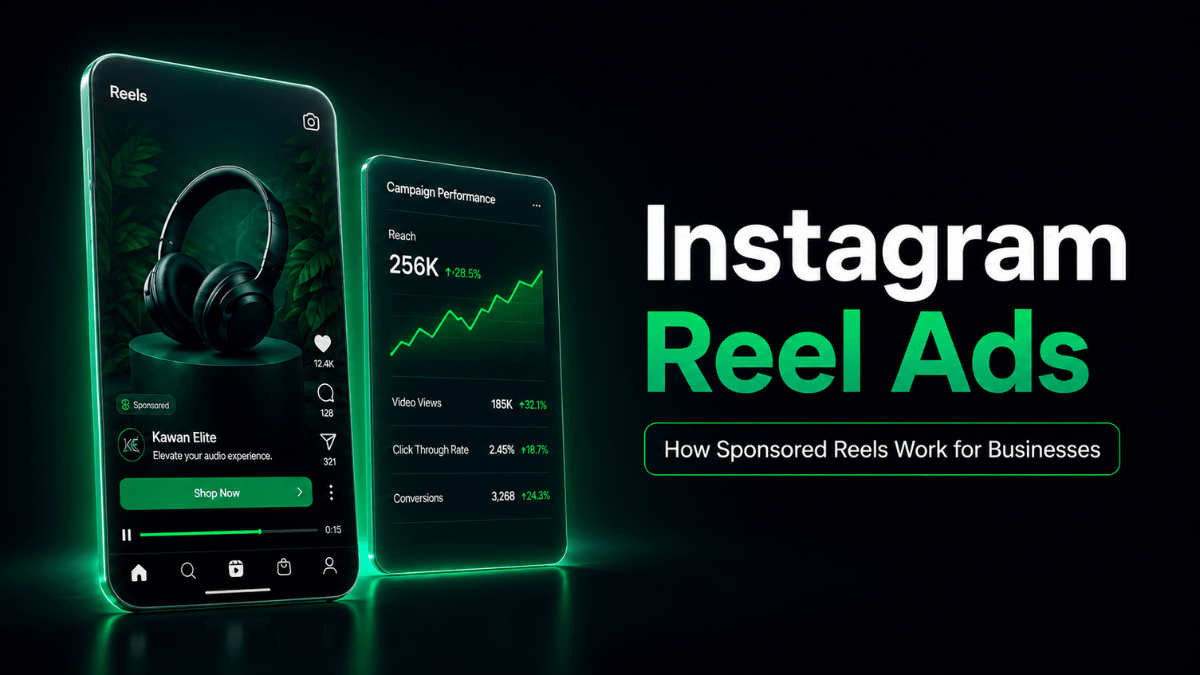
This is where Instagram Reel Ads come in. Reel Ads are paid advertisements shown within Instagram’s Reels experience and can support goals such as awareness, website traffic, enquiries, leads or sales.
Within a broader Instagram Advertising Malaysia strategy, Reel Ads can help businesses use short-form video more effectively by connecting the opening hook, audience, message, CTA, destination and measurement around one clear campaign objective.
Instagram Reel Ads are paid advertisements displayed within Instagram’s Reels experience. Businesses can promote an eligible existing Reel or create a structured campaign through Meta Ads Manager using a campaign objective, audience, placement, budget, creative and destination. Results should be measured according to the selected business goal.
Understanding how Reel Ads work helps businesses choose the right promotion method and prepare creative suited to fast-moving short-form video.
What Are Instagram Reel Ads and How Do They Work?
Instagram Reel Ads appear as users scroll through the Reels experience. They use vertical video creative and include advertising indicators that distinguish them from organic Reels.
A typical journey is:
Reel Ad → CTA → Destination → Measurable Result
Because users can quickly scroll to the next Reel, the opening should communicate the subject, problem or benefit immediately.
Depending on the campaign setup, the advertisement may include a CTA directing users to a landing page, product page, lead form or another relevant destination.
Performance should then be measured according to the campaign objective rather than video views alone. Awareness campaigns may focus on reach, while lead and sales campaigns require deeper metrics such as conversions, cost per result and customer quality.
Organic Reels vs Boosted Reels vs Reel Ads
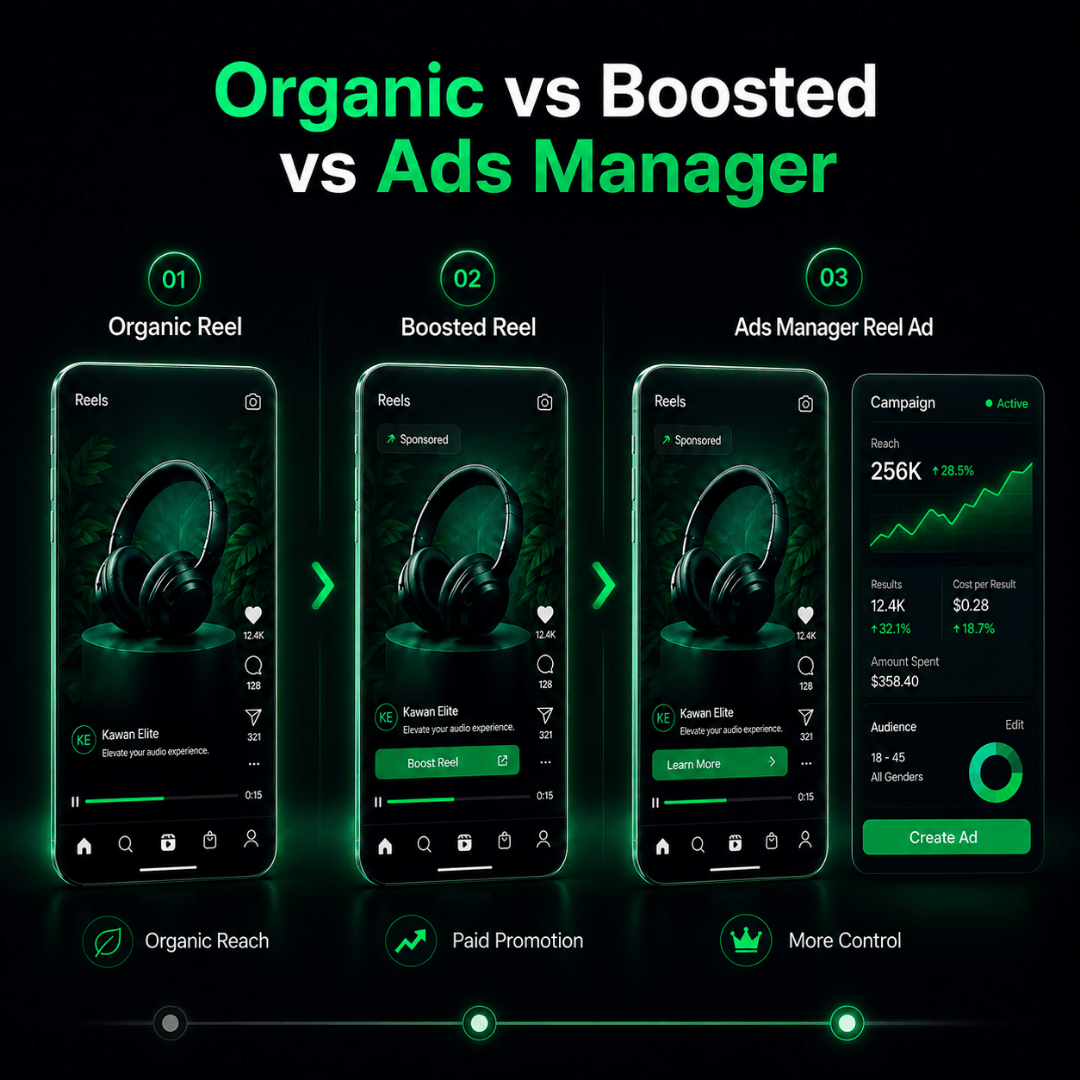
Businesses generally have three ways to use Reels:
- Publish an organic Reel
- Boost an eligible existing Reel
- Create a Reel campaign through Meta Ads Manager
These approaches are related but serve different purposes.
| Area | Organic Reel | Boosted Reel | Ads Manager Reel Ad |
| Paid distribution | No | Yes | Yes |
| Existing Reel required | Published normally | Existing eligible Reel | Existing or dedicated creative |
| Audience control | Organic distribution | Simplified targeting | Greater campaign control |
| Campaign objectives | Organic content goals | Simplified promotion goals | Structured advertising objectives |
| Creative testing | Limited | Limited | Supports structured testing |
| Measurement | Organic insights | Promotion results | More detailed reporting |
| Best suited for | Organic reach and content | Simple paid promotion | Leads, sales and structured campaigns |
Organic Reels rely mainly on normal Instagram distribution without paid promotion.
Boosted Reels give eligible existing Reels additional paid reach through Instagram’s simplified promotion process.
Ads Manager Reel Ads provide greater control over objectives, audiences, placements, creative and measurement. Businesses may also use dedicated advertising creative instead of relying only on an existing published Reel.
For a broader comparison between simplified promotion and structured campaigns, businesses can refer to the separate Boosted Posts vs Instagram Ads guide.
When Should Businesses Use Instagram Reel Ads?
Reel Ads may work well when the campaign message can be communicated through short, visual storytelling.
| Business Goal | How Reel Ads Can Support It |
| Awareness | Introduce a product, service or brand through short video |
| Product demonstration | Show how a product works or highlight a benefit |
| New launch | Build attention around a product, service or outlet |
| Website traffic | Encourage viewers to visit a relevant landing page |
| Lead generation | Move interested users towards an enquiry or lead form |
| Retargeting | Reconnect with previous visitors or engagers |
| Sales | Promote products or offers with a clear conversion path |
Reels are especially useful when movement, demonstration or storytelling make the offer easier to understand.
However, they should not automatically replace Feed or Story placements. Campaigns with detailed information or complex comparisons may benefit from another format or a combination of placements.
The campaign objective should determine the placement.
How to Create Instagram Reel Ads in Meta Ads Manager
Creating Reel ads on Instagram should begin with the intended business outcome rather than the video itself.
Meta may change its interface over time, so businesses should focus on the campaign logic rather than memorising individual buttons.
- Choose the objective – Define whether the campaign supports awareness, traffic, leads, sales or another suitable result.
- Define the audience – Select people relevant to the offer, location and customer profile.
- Choose Reel placement – Include Reels within the appropriate placement strategy.
- Set the budget and schedule – Allocate enough budget and time to collect useful campaign data.
- Prepare the creative and destination – Use an eligible existing Reel or dedicated vertical creative and connect it to a relevant landing page or conversion point.
For local businesses, a smaller but relevant audience can be more useful than broad reach outside the service area.
Instagram Reel Ad Specifications and Safe Zones
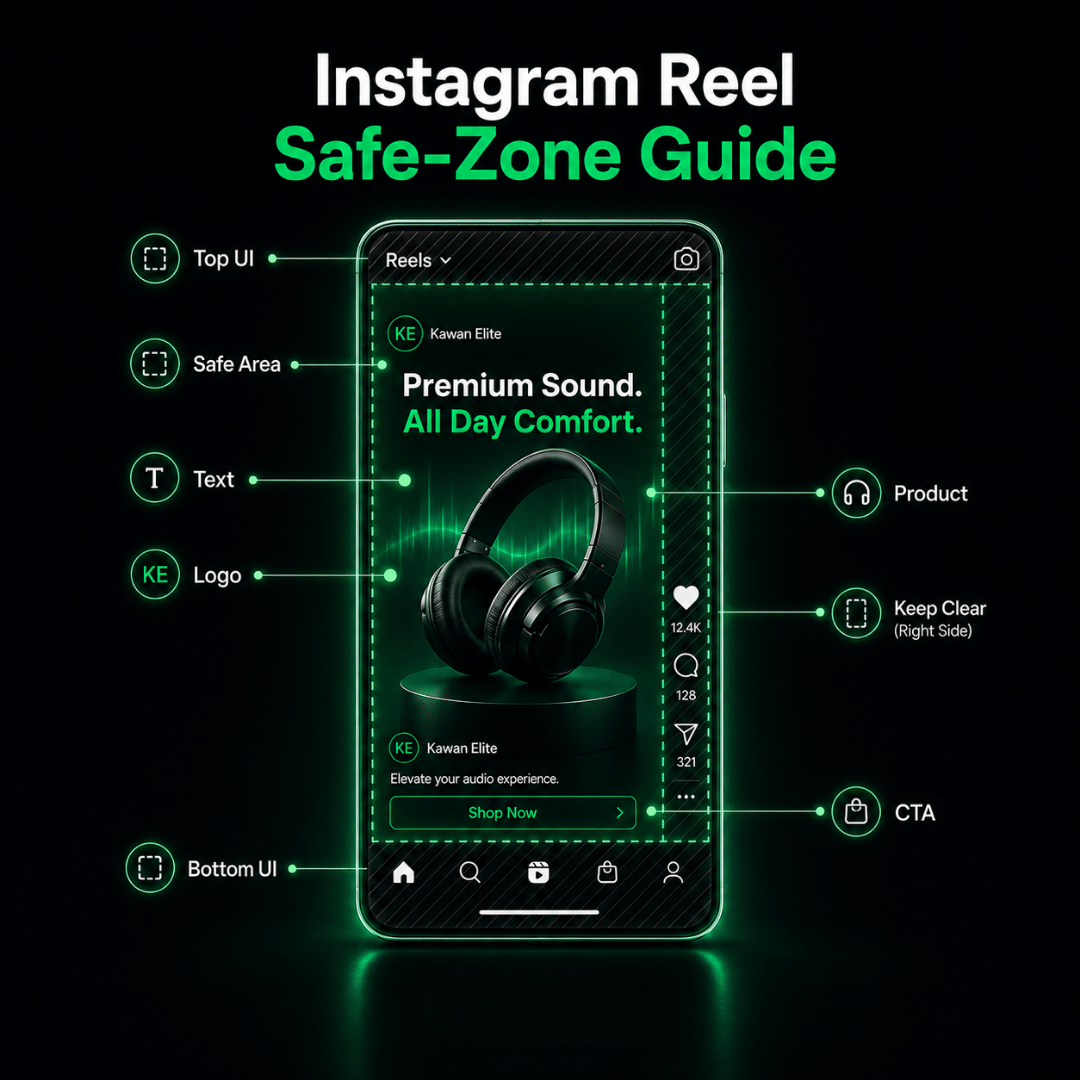
Instagram Reels are designed for a vertical mobile environment, making 9:16 creative the natural format for the placement.
Keep important elements such as:
- Headlines
- Logos
- Products
- Offers
- Main visual subjects
- CTA-related information
away from areas occupied by captions, engagement controls and other interface elements.
Important content should remain clearly visible within the central viewing area so viewers can understand the advertisement without struggling to read it.
Businesses should also avoid assuming that every rule applying to a boosted existing Reel is identical to every Reel advertisement created through Meta Ads Manager.
Requirements may differ depending on the promotion method, creative format and campaign setup. Check the current requirements for the method being used before finalising the creative.
What Makes an Effective Instagram Reel Ad?
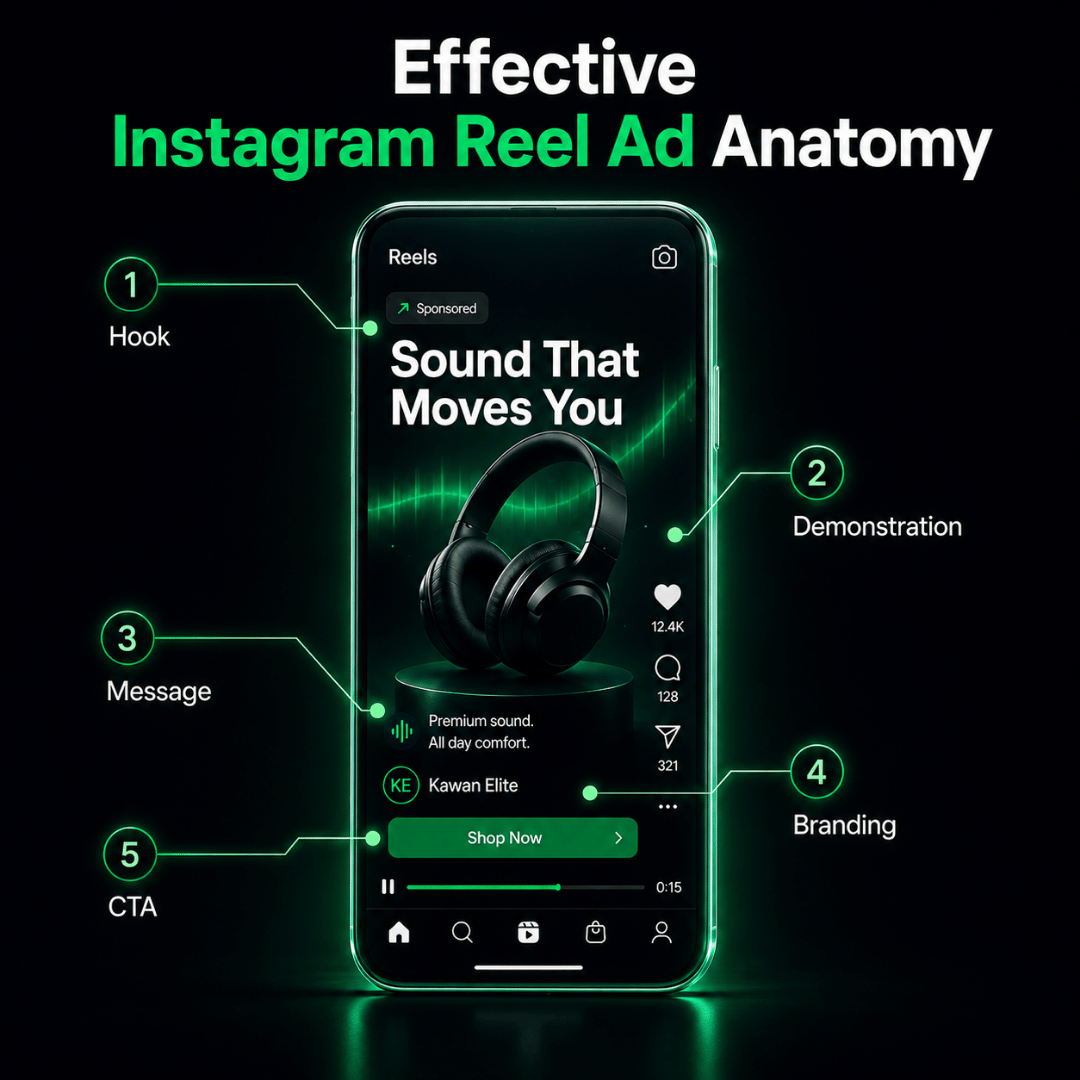
The strongest Reel Ads usually feel suited to the environment rather than looking like a traditional advertisement forced into a vertical frame.
| Creative Element | Recommended Approach |
| Opening Hook | Establish the problem, benefit or subject immediately |
| Demonstration | Show the product, service or outcome visually |
| Message | Focus on one primary idea |
| Presentation | Use native-looking vertical video |
| Branding | Make the advertiser recognisable without dominating |
| CTA | Give viewers one clear next step |
| Sound & Captions | Use audio purposefully while keeping the message understandable visually |
A useful structure is:
Hook → Demonstration → Message → Offer → CTA
Start Quickly
Avoid spending the opening seconds on long logos or introductions.
Show the subject, customer problem, product or main benefit early enough that viewers understand why they should keep watching.
Keep the Message Focused
One Reel should not try to explain every feature, benefit and company detail.
Use the video to create interest, then provide supporting information on the landing page.
Make Sound Helpful, Not Essential
Audio can strengthen Reel creative, but viewers may not always consume advertisements with sound.
Captions, on-screen messaging and clear visuals help keep the message understandable either way.
How to Connect Reel Ads With the Landing Page
A strong Reel may generate attention, but the destination determines what happens next.
The ideal journey is:
Reel Ad → CTA → Relevant Landing Page → Conversion
The destination should continue the same offer introduced in the Reel. Avoid sending users to a generic homepage when the advertisement promotes a specific product, service or campaign.
Since viewers are already on mobile devices, the landing page should load quickly, display clearly, repeat the main offer and make the intended next action easy to complete.
The CTA should also match the destination. A Reel promising a quotation should lead towards a quotation process, while a product advertisement should lead towards the relevant product or purchase path.
What Should Businesses Measure?
The right metric depends on the campaign objective.
| Campaign Goal | Main Metric | Supporting Metric |
| Awareness | Reach / Impressions | Video engagement |
| Traffic | Landing-page visits | CTR |
| Leads | Qualified leads | Cost per lead |
| Sales | Purchases / Conversion value | Cost per purchase |
| Engagement | Relevant interactions | Cost per engagement |
Video attention can show whether the creative is attracting interest, but it should not replace business metrics when the campaign is expected to generate leads or sales.
Businesses should ask:
- Did the Reel reach the intended audience?
- Did viewers move beyond the video?
- Did they reach the destination?
- Did they complete the intended action?
- Were the leads or customers relevant?
- Was the cost reasonable for the result?
Common Instagram Reel Advertising Mistakes
A Slow Opening
If the main message appears too late, viewers may scroll away before understanding the offer.
Reusing Generic Video Without Adaptation
Horizontal videos or creative designed for another placement may feel awkward inside Reels. Prepare the content specifically for vertical short-form viewing.
Adding Too Much Text
Heavy on-screen copy can make the video difficult to follow. Prioritise one clear message.
Ignoring Safe Areas
Important text, logos or products positioned too close to interface controls may lose visibility.
Measuring Views Instead of Business Outcomes
High view counts can support awareness, but they do not automatically indicate strong lead or sales performance.
How to Test and Improve Sponsored Reels
Businesses can test variations in the opening hook, visual, offer, CTA, audience and landing-page message.
Where practical, change one meaningful element at a time so the results provide a clearer lesson.
Strong engagement with weak conversions may indicate that the audience, offer or destination needs improvement rather than simply more advertising budget.
Instagram Reel Ad Pre-Launch Checklist
Before launching, review the complete customer journey.
| Check | What to Confirm |
| Campaign objective | Matches the intended business result |
| Audience | Relevant to the offer |
| Reel placement | Appropriate for the campaign |
| Format | Vertical and designed for short-form viewing |
| Opening | Communicates the subject quickly |
| Message | One clear primary idea |
| Branding | Visible and recognisable |
| Safe zones | Important elements remain clear |
| CTA | Matches the desired next action |
| Landing page | Relevant and mobile-friendly |
| Tracking | Required measurement prepared |
| Final review | Creative, links and campaign settings checked |
Final Takeaway
Instagram Reel Ads give businesses a way to reach audiences within a fast-moving short-video environment.
Effective Reel Ads combine a strong opening, clear message, vertical creative, recognisable branding and a relevant CTA. The goal is not simply to generate more views, but to guide the right viewers towards a measurable next step.
Explore Our Instagram Advertising Services to learn how campaign planning, creative direction and optimisation can support better results.
For businesses planning Reel campaigns around leads, sales or other measurable outcomes, Plan Your Instagram Reel Advertising Campaign With Us.