
In the competitive world of project pitches, vendors often present themselves as capable of handling every aspect of a project, promising swift delivery, expansive scope, and guaranteed results. While such assurances may sound appealing, they can lead to significant issues down the line, including missed deadlines, budget overruns, and subpar deliverables. This article explores the true cost of overpromising and offers insights into identifying and avoiding such pitfalls.
The Psychology Behind Overpromising
Overpromising is a common tactic used by vendors aiming to secure contracts. Several factors contribute to this behavior:
- Competitive Pressure: In a saturated market, vendors feel compelled to outshine competitors by making ambitious promises.
- Optimism Bias: Vendors may genuinely believe they can deliver more than is realistically feasible.
- Lack of Accountability: Some vendors assume that challenges can be addressed later, underestimating the complexities involved.
A study by McKinsey and the University of Oxford found that large IT projects often exceed their budgets by 45%, run over time by 7%, and deliver 56% less value than anticipated.
Real-Life Consequences of Overpromising
Engaging with vendors who overpromise can lead to several adverse outcomes:
- Budget Overruns: Initial cost estimates may balloon due to unforeseen challenges and scope expansions.
- Project Delays: Overambitious timelines often result in missed deadlines.
- Reduced Quality: In an attempt to meet unrealistic promises, vendors may compromise on quality.
- Stakeholder Frustration: Unmet expectations can lead to dissatisfaction among stakeholders and end-users.
Gartner reports that only 48% of digital initiatives meet or exceed their business outcome targets, highlighting the prevalence of such issues.
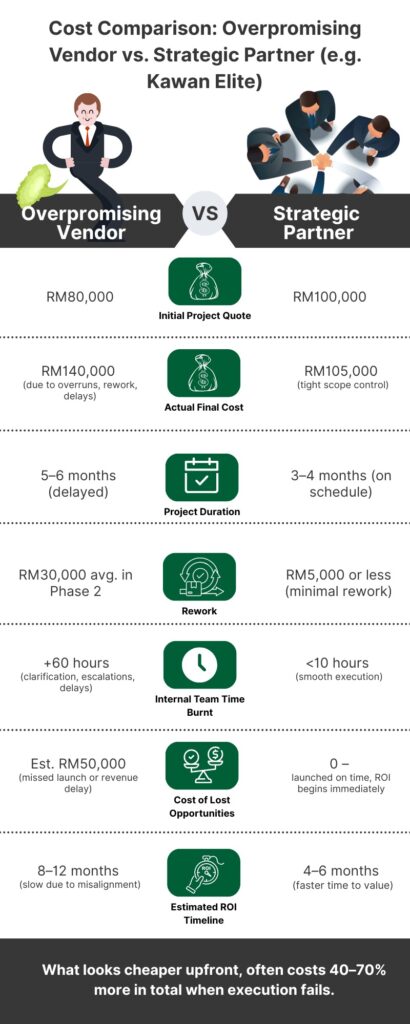
How to Spot the Red Flags Early
To avoid the pitfalls of overpromising, be vigilant for these warning signs during vendor evaluations:
- Vague Proposals: Lack of detailed plans or methodologies can indicate insufficient preparation.
- Unrealistic Timelines: Promises of rapid delivery without a clear roadmap are suspect.
- Avoidance of Limitations: Vendors unwilling to discuss potential challenges or limitations may lack transparency.
- Overuse of Buzzwords: Excessive jargon without substantive content can be a red flag.
What to Ask Instead
To ensure a vendor’s capabilities align with your project’s needs, consider asking:
- “Can you provide case studies of similar projects you’ve completed?”
- “How do you handle unforeseen challenges during a project?”
- “Who will be the key personnel involved, and what are their qualifications?”
- “What is your approach to project scope changes?”
These questions can help gauge a vendor’s experience, adaptability, and transparency.
How Responsible Vendors Operate Differently
Vendors committed to delivering quality outcomes typically:
- Set Realistic Expectations: They provide achievable timelines and budgets based on thorough analysis.
- Maintain Transparency: Open communication about potential challenges and limitations is a hallmark of responsible vendors.
- Focus on Collaboration: They work closely with clients to ensure alignment and adaptability throughout the project.
- Prioritize Quality: Emphasis is placed on delivering high-quality results over merely meeting deadlines.
Conclusion
While the allure of vendors promising the world is strong, it’s essential to approach such pitches with caution. Overpromising can lead to significant setbacks, both financially and operationally. By recognizing the signs of overpromising and engaging in thorough vetting processes, organizations can select vendors who are not only capable but also committed to delivering value with integrity.
What Makes Kawan Elite Different
At Kawan Elite, we don’t just pitch – we partner.
We believe that successful projects don’t start with “yes to everything.” They start with honest conversations, strategic clarity, and the right-fit solutions. That’s why our approach focuses on:
- Transparency first – We tell you what we do best, and bring in trusted partners where needed.
- Performance over promises – Our track record speaks through outcomes, not just slides.
- Long-term growth mindset – We’re here to help you scale, not just deliver a one-off job.
Whether you’re planning a marketing transformation or a technology-driven growth initiative, our team brings the balance of real capability and clear communication so you get results without the surprises.
If you’re tired of vague promises and want to work with a team that treats your project like their own, let’s work together!