
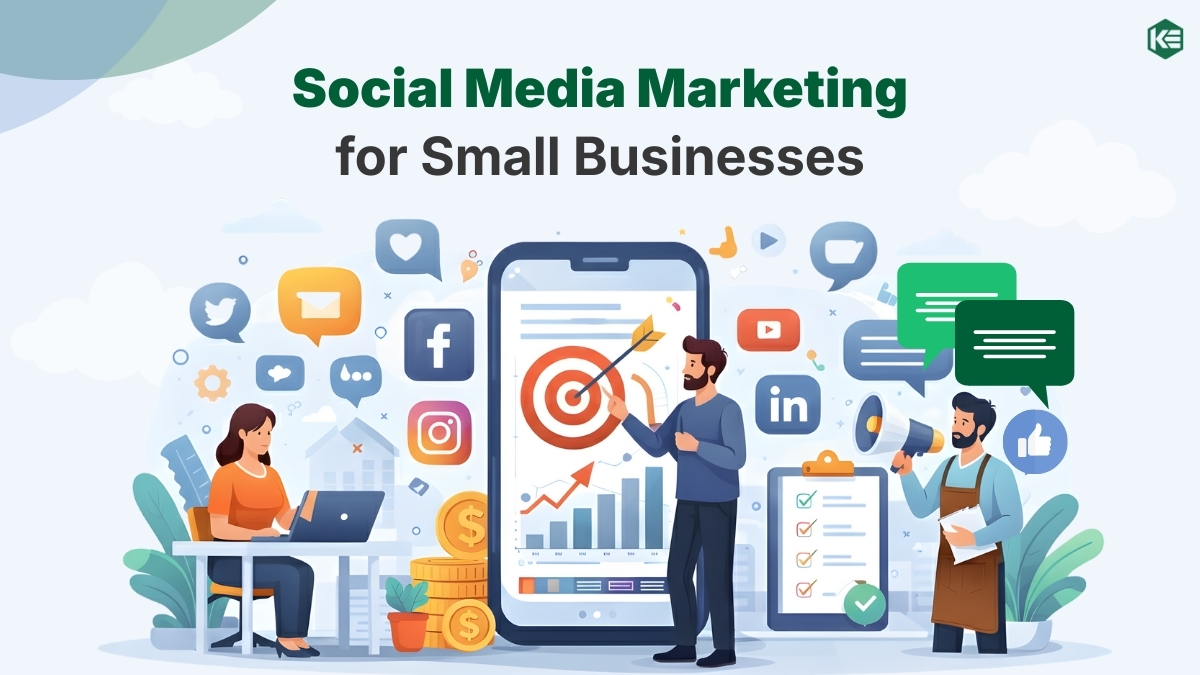
Social media marketing for small businesses plays a critical role in helping brands build visibility, engage customers, and grow online with limited budgets. For many small businesses, social media can feel overwhelming. You may be posting regularly but not seeing results, or you may not know where to start at all. With limited time and budget, every marketing effort needs to be effective.
This practical guide explains how social media marketing works for small businesses, what strategies matter most, and how you can use it as part of a broader digital marketing approach to grow your business sustainably.
What Is Social Media Marketing for Small Businesses?
According to Google Digital Garage, small businesses that use social media strategically can build stronger relationships and improve brand awareness online. Social media marketing for small businesses focuses on using platforms like Facebook, Instagram, LinkedIn, or TikTok to build brand awareness, engage customers, and generate leads without relying on large advertising budgets.
Unlike big brands, small businesses succeed by:
- Targeting the right audience
- Sharing relevant, useful content
- Building genuine relationships
- Aligning social media with business goals
When done correctly, social media becomes a cost-effective marketing channel that supports long-term growth.
For a broader explanation of how this fits into overall online growth, you can also read our complete guide on social media marketing within digital marketing strategies.
Why Social Media Marketing Matters for Small Businesses
Small businesses face unique challenges: limited resources, strong competition, and the need to show quick results. Social media marketing helps address these challenges by offering:
- High visibility at low cost
- Direct communication with customers
- Measurable engagement and performance
- Flexible content and advertising options
Instead of competing on budget, small businesses compete on relevance and consistency.
Common Challenges Small Businesses Face on Social Media
Before building a strategy, it’s important to understand common social media marketing mistakes:
- Posting without a clear goal
- Trying to be on every platform
- Creating content without understanding the audience
- Focusing only on sales instead of value
- Not tracking performance
The solution is not more posting, it’s better planning.
How to Start Social Media Marketing for Small Businesses (Step-by-Step)

1. Define Clear Marketing Goals
Start by deciding what you want social media to achieve:
- Brand awareness
- Website traffic
- Lead generation
- Customer engagement
Each goal requires a different content approach.
2. Choose the Right Social Media Platforms
You don’t need to be everywhere. Choose platforms based on where your audience spends time:
- Facebook & Instagram → Local businesses, retail, services
- LinkedIn → B2B and professional services
- TikTok → Younger audiences and visual storytelling
Focus on 1–2 platforms first and do them well.
3. Create Valuable and Consistent Content
Effective content for small businesses includes:
- Educational tips
- Behind-the-scenes posts
- Customer testimonials
- Simple videos or visuals
- Frequently asked questions
Consistency matters more than perfection. A realistic posting schedule is better than posting daily and stopping later.
4. Engage With Your Audience
Social media is not a one-way channel. Engagement builds trust:
- Reply to comments and messages
- Like and respond to feedback
- Join relevant conversations
Platforms reward active engagement with better reach.
5. Track Performance and Improve
Use platform insights to monitor:
- Reach and engagement
- Clicks and leads
- Content performance
This helps you understand what works and refine your strategy over time.
How Social Media Supports Business Growth
When aligned with a broader digital marketing strategy, social media helps small businesses:
- Increase brand recognition
- Build credibility and trust
- Support lead generation campaigns
- Drive website traffic
- Strengthen customer relationships
This is why social media should never stand alone. It works best as part of an integrated online marketing system.
When Small Businesses Should Consider Professional Support
Many small business owners start social media marketing on their own. However, professional support may be valuable when:
- Results are inconsistent
- Time becomes a constraint
- Paid advertising is needed
- A long-term strategy is required
At this stage, working with experienced digital marketers can help you avoid costly trial and error, and accelerate growth.
How This Guide Connects to the Bigger Picture
This article focuses specifically on social media marketing for small businesses. To understand how social media fits into a complete online growth framework, we recommend reading our pillar article:
Social Media Marketing Explained: How Digital Marketing Helps Businesses Scale Online
This connection ensures your social media efforts support broader business goals, not just short-term engagement.
Final Thoughts
Social media marketing doesn’t require a large budget, it requires clarity, consistency, and strategy. For small businesses, success comes from focusing on the right platforms, delivering value, and aligning efforts with measurable business outcomes.
By starting with a practical approach and refining over time, social media can become one of the most effective tools in your digital marketing toolkit.