
Many businesses invest time and budget into digital marketing but still struggle to see consistent results. Websites are live, social media accounts are active, and campaigns are running, yet growth feels slow or unpredictable. In most cases, the issue is not effort, but lack of a clear digital marketing strategy.
A strong digital marketing strategy connects channels, goals, and measurement into a single framework. Within that framework, social media plays a critical role in driving awareness, engagement, and long-term business growth.
This article explains what a digital marketing strategy is, how social media fits into it, and why businesses that align social media with strategy perform better online.
What Is a Digital Marketing Strategy?
According to HubSpot, a clear digital marketing strategy helps businesses align channels, messaging, and goals to achieve consistent growth. It is a structured plan that defines how a business uses online channels to achieve specific goals. These goals may include increasing brand awareness, generating leads, driving sales, or building long-term customer relationships.
Rather than focusing on individual tactics, a digital marketing strategy answers key questions:
- Who is the target audience?
- What business goals need to be achieved?
- Which digital channels are most effective?
- How will performance be measured and optimised?
Without a strategy, digital marketing becomes fragmented. With a strategy, every channel including social media works together toward measurable outcomes.
Why Strategy Matters More Than Channels
Many businesses approach digital marketing by choosing platforms first. They create social media accounts, run ads, or publish content without a clear connection to business objectives. This often leads to inconsistent messaging and unclear returns.
A strategy-first approach ensures that:
- Marketing activities support business goals
- Resources are allocated effectively
- Performance can be measured accurately
- Growth becomes predictable rather than random
Social media delivers the strongest results when it operates within this strategic structure.
The Role of Social Media in a Digital Marketing Strategy
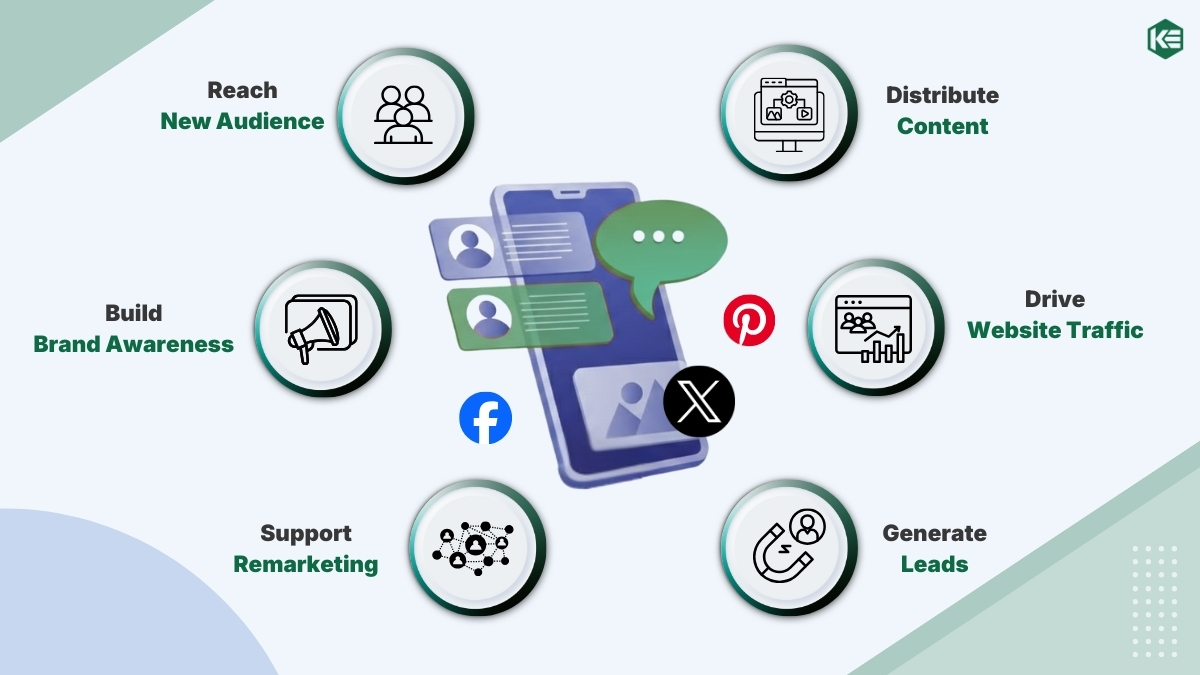
Social media is not just a promotional channel. Within a digital marketing strategy, it serves multiple strategic functions across the customer journey.
Social media supports digital marketing by:
- Introducing brands to new audiences
- Reinforcing brand positioning and messaging
- Supporting content distribution
- Driving traffic to websites and landing pages
- Supporting lead generation and remarketing
Because social media platforms combine content, communication, and data, they act as a bridge between awareness and conversion-focused channels.
For a complete overview of how social media marketing works within the broader digital ecosystem, refer to our pillar guide on social media marketing and digital marketing strategies.
How Social Media Supports Each Stage of Business Growth
A well-defined digital marketing strategy considers how customers move from awareness to decision-making. Social media supports each stage in different ways.
Awareness Stage
At the awareness stage, social media helps businesses reach audiences who may not yet be actively searching for their products or services. Through organic content and targeted advertising, brands can increase visibility and recognition.
Engagement Stage
As audiences interact with content, social media builds engagement. Comments, shares, and messages help businesses understand audience needs while strengthening trust and credibility.
Conversion Support Stage
While social media may not always drive direct sales, it plays a critical role in supporting conversions. Retargeting campaigns, testimonials, and educational content help reinforce decisions made through other channels.
Digital Marketing Strategy vs Social Media Tactics
One common mistake businesses make is confusing strategy with tactics. Posting content, running ads, or following trends are tactics. Strategy defines why, when, and how those tactics are used.
A digital marketing strategy:
- Sets clear objectives
- Aligns messaging across platforms
- Defines success metrics
- Ensures consistency over time
Social media tactics only become effective when they are guided by this strategic framework.
Integrating Social Media With Other Digital Marketing Channels
Social media delivers the best results when integrated with other digital marketing efforts rather than operating alone.
Within a digital marketing strategy, social media often works alongside:
- Search engine optimisation (SEO) to amplify content visibility
- Email marketing to nurture leads and customers
- Paid search advertising to support conversion-focused campaigns
- Content marketing to distribute insights and resources
This integration ensures consistent messaging and reinforces brand presence across multiple touchpoints.
Measuring Social Media’s Impact in a Digital Marketing Strategy
Strategic decision-making depends on measurement. Rather than focusing on vanity metrics alone, businesses should evaluate how social media contributes to broader marketing goals.
Key measurement areas include:
- Brand awareness indicators such as reach and impressions
- Engagement metrics including comments, shares, and saves
- Traffic and lead contribution to websites and landing pages
- Assisted conversions within the customer journey
Tracking these metrics helps businesses understand how social media supports growth rather than evaluating it in isolation.
Common Strategic Gaps Businesses Face
Even with active social media presence, businesses often face strategic gaps that limit growth.
Common issues include:
- Social media goals not aligned with business objectives
- Inconsistent messaging across platforms
- Over-reliance on short-term trends
- Lack of performance review and optimisation
- Treating social media as a standalone channel
Addressing these gaps requires stepping back from daily execution and reassessing strategy.
When Businesses Should Review Their Digital Marketing Strategy
A digital marketing strategy is not static. Businesses should review their strategy when:
- Growth plateaus despite active campaigns
- Marketing performance becomes difficult to measure
- New products or markets are introduced
- Budgets increase or decrease significantly
- Digital trends or platforms change
At these points, reassessing the role of social media within the strategy helps maintain alignment and effectiveness.
The Strategic Value of Professional Support
As businesses grow, digital marketing becomes more complex. Strategy development, performance analysis, and channel integration require experience and structure.
Professional digital marketing support helps businesses:
- Clarify goals and priorities
- Align social media with overall strategy
- Avoid costly trial and error
- Scale campaigns more efficiently
Rather than replacing internal efforts, strategic support strengthens long-term outcomes.
How This Strategy Connects to Social Media Marketing
This article focuses on digital marketing strategy and the strategic role of social media. To understand the full scope of social media marketing, what it is, why it matters, and how businesses use it to scale online. Read our pillar article on social media marketing within digital marketing.
Together, these resources provide a complete picture of how strategy and execution work hand in hand.
Final Thoughts
A successful digital marketing strategy is not built on individual platforms or tactics. It is built on alignment, clarity, and measurement. Social media plays a vital role within this framework by supporting awareness, engagement, and conversion across the customer journey.
Businesses that integrate social media strategically into their digital marketing efforts are better positioned to grow sustainably, adapt to change, and achieve measurable results online.